




.jpg)
Law firms hold the context that makes cybercrime convincing. Matter files, settlement discussions, deal terms, client identities, payment details, and privileged communications can give an attacker enough information to imitate a trusted participant at the right moment.
This risk often develops beyond the firm’s direct control. A compromised client mailbox, external adviser, expert witness, supplier, contractor, or opposing party can expose fragments of a live matter. Criminals can study those fragments, understand who is involved, and prepare a credible request for funds, documents, credentials, or confidential information.
Why Traditional Defenses May See the Attack Too Lat
Most security controls focus on activity reaching the firm. They inspect incoming messages, attachments, links, devices, and network events for signs of an active threat. These controls remain necessary, but the criminal may have already completed much of the preparation elsewhere.
By the time a polished impersonation email reaches a lawyer, finance employee, or client, the attacker may already know the matter name, communication style, transaction stage, and expected payment process. The final message is only the visible part of a longer operation.
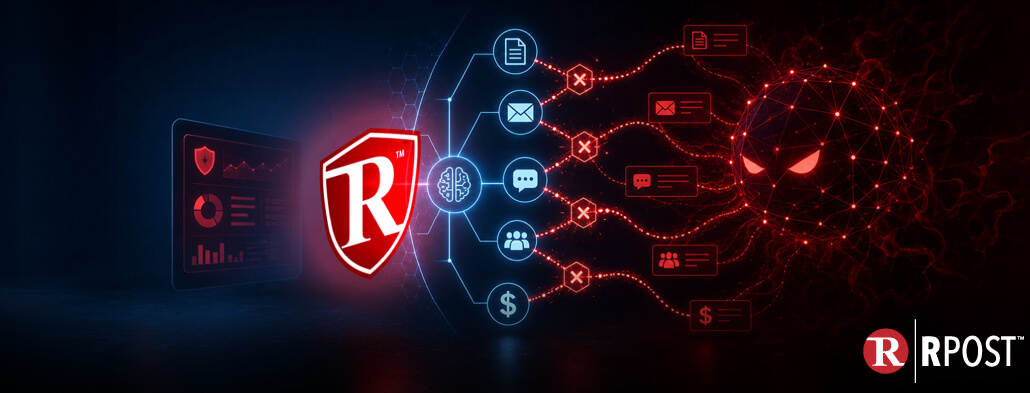
PRE-Crime™ preemptive cybersecurity looks for indications that business information is being observed or collected while an attack is still taking shape. For legal organizations, this means examining risk across the wider communication chain, including third parties that exchange sensitive content with the firm.
It also changes the response objective. Security teams gain an opportunity to investigate suspicious exposure, protect affected content, and reduce what an attacker can use before a fraudulent instruction or targeted lure is sent.
RPost’s RAPTOR™ AI agent framework supports this approach by identifying signals of external reconnaissance and potential information leakage. Related controls can help organizations retain authority over selected content after delivery, including the ability to restrict or remove access when risk emerges.
This approach complements the defenses a firm already uses. It adds visibility around the third-party and post-delivery conditions that can shape an attack, giving legal, security, and risk teams more time to act before exposed context becomes a credible cybercrime.
Gartner Emerging Tech Impact Radar research has identified RPost in connection with the preemptive cybersecurity category. Learn how RPost’s PRE-Crime™ solutions and RAPTOR™ AI address threats during their preparation stage. (Read news here).
August 20, 2026

August 13, 2026
.jpg)
August 06, 2026
August 06, 2026



 Industry Insights