





Large enterprises rarely complete a transaction inside one controlled environment. Contracts, invoices, forecasts, and customer records move between regional teams, suppliers, advisers, clients, and service providers. Each handoff gives attackers another place to watch.
Most email security programs concentrate on threats arriving at the company. That remains necessary, but it does not address what happens after an employee sends sensitive material to an external party. The recipient may have weaker controls or a compromised mailbox. The sender's information can then be exposed even though its own systems were not breached.
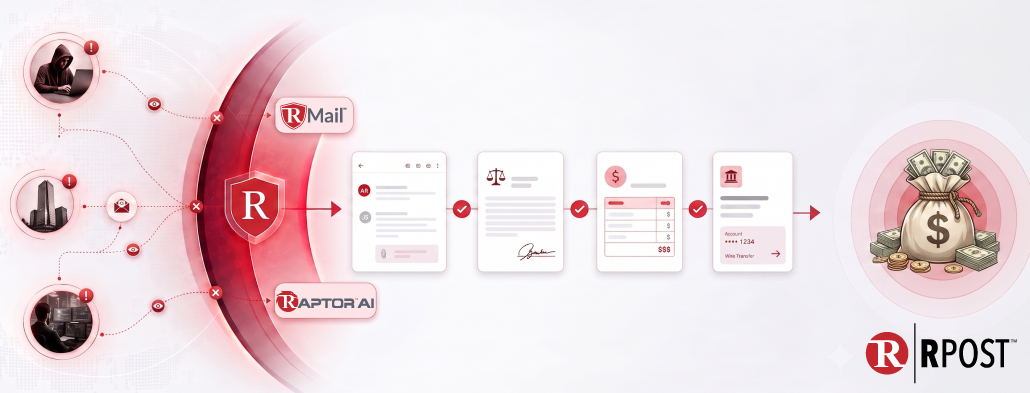
For organizations managing high-value transactions across several markets, this creates a direct business risk. An attacker who reads a supplier conversation can learn the payment timing, contract terms, and invoice format. That context can be used to insert false bank details, impersonate a trusted contact, or redirect a legitimate payment before either company recognizes the intrusion.
The same pattern can affect acquisition documents, legal correspondence, product plans, and executive communications. Exposure can arise at any external organization that retains the sender's content.
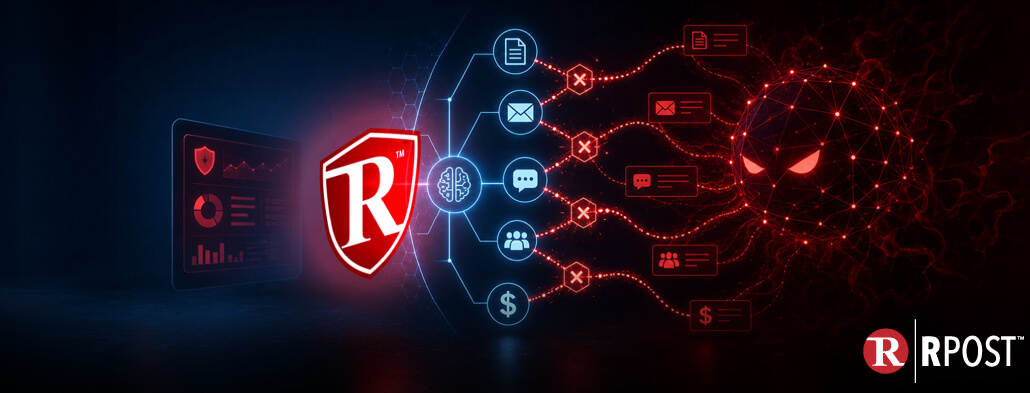
Managing this exposure requires visibility along the outbound message path. Security teams need signals of activity inside a compromised third-party account, replies routed to a lookalike domain, or sensitive information sent by an employee through error or misuse.
RPost adds this layer through PRE-Crime™ pre-emptive cybersecurity and RAPTOR™ AI. Eavesdropping AI is designed to identify signs that a threat actor is observing content beyond the company's network. When sensitive files are considered exposed, AI Auto-Lock™ can restrict access after delivery, helping contain the material without waiting for the third party to act.
For a large enterprise, vendor reviews and inbound controls cover only part of the risk. Security teams also need to detect exposure in active communications and limit access when a transaction shows signs of compromise.
Contact RPost to review how your organization can detect third-party message exposure and protect sensitive content after it leaves the corporate environment.
October 13, 2026
August 20, 2026
August 13, 2026
.jpg)
August 06, 2026
.jpg)
August 06, 2026



 Industry Insights