




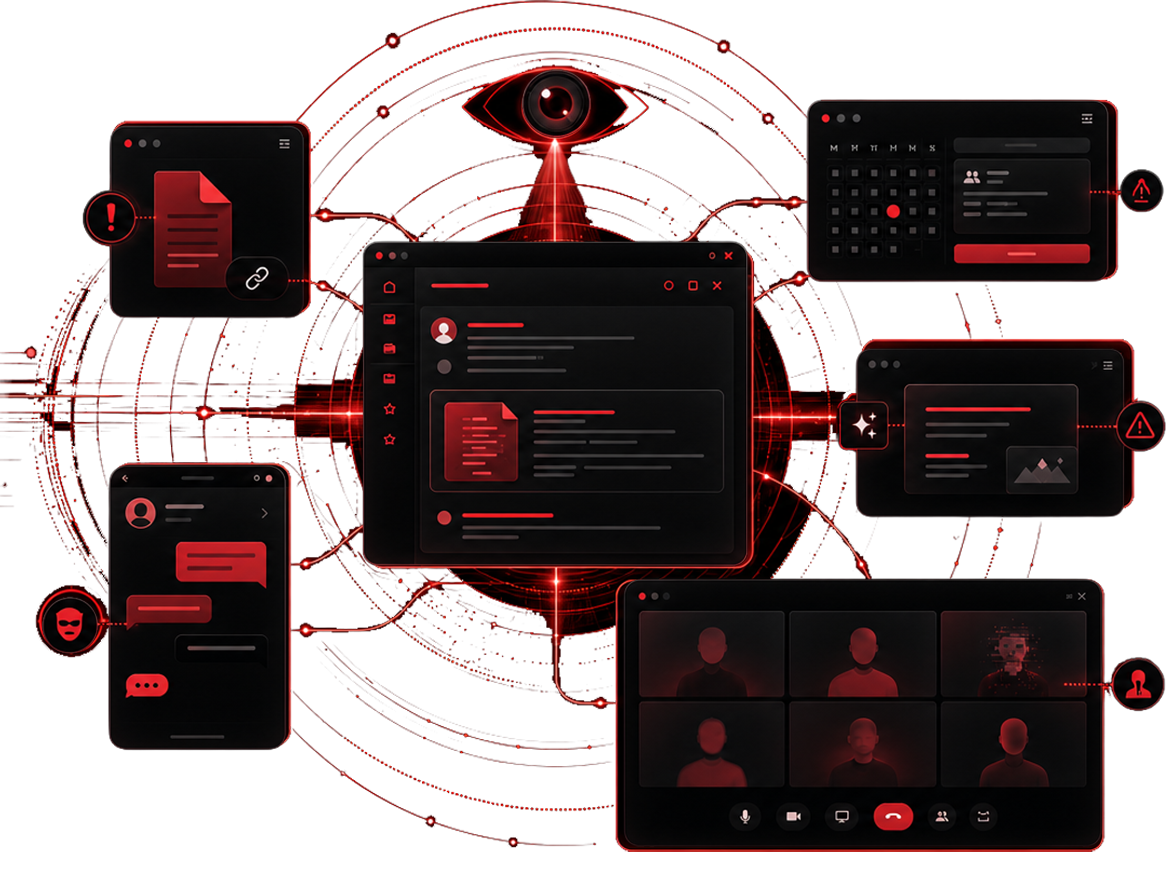
Detect unusual access to exposed documents, shared files, persistent links, and other collaboration artifacts. RAPTOR AI evaluates content interaction signals that may indicate automated scanning, unauthorized viewing, or reconnaissance by an unintended party.
Automatically restrict sensitive or proprietary content when configured risk indicators appear. These indicators may include suspicious application scanning, anomalous access patterns, untrusted networks, or activity associated with cybercriminal reconnaissance.
Review whether suspicious access to documents or files may be connected to a later out-of-band impersonation attempt. This can help teams understand how an attacker obtained the details used to make an SMS, messaging-app, customer, or vendor impersonation more credible.
Identify hidden prompts and embedded instructions intended for AI assistants or agents processing shared content such as documents, messages, attachments, links, and collaboration artifacts.
Detects signals indicating that meeting details or related content may have been accessed by an unauthorized participant, impersonator, or reconnaissance actor.
Connect activity across shared-content access, document and file downloads, email communications, meeting information, collaboration workflows, and subsequent impersonation indicators to help security teams determine whether exposed business context may be contributing to a developing social-engineering attack.
Use RPostONE™ to manage policies, review RAPTOR AI insights, investigate suspicious activity, and coordinate response across email, documents, files, eSignature transactions, and related workflows.