




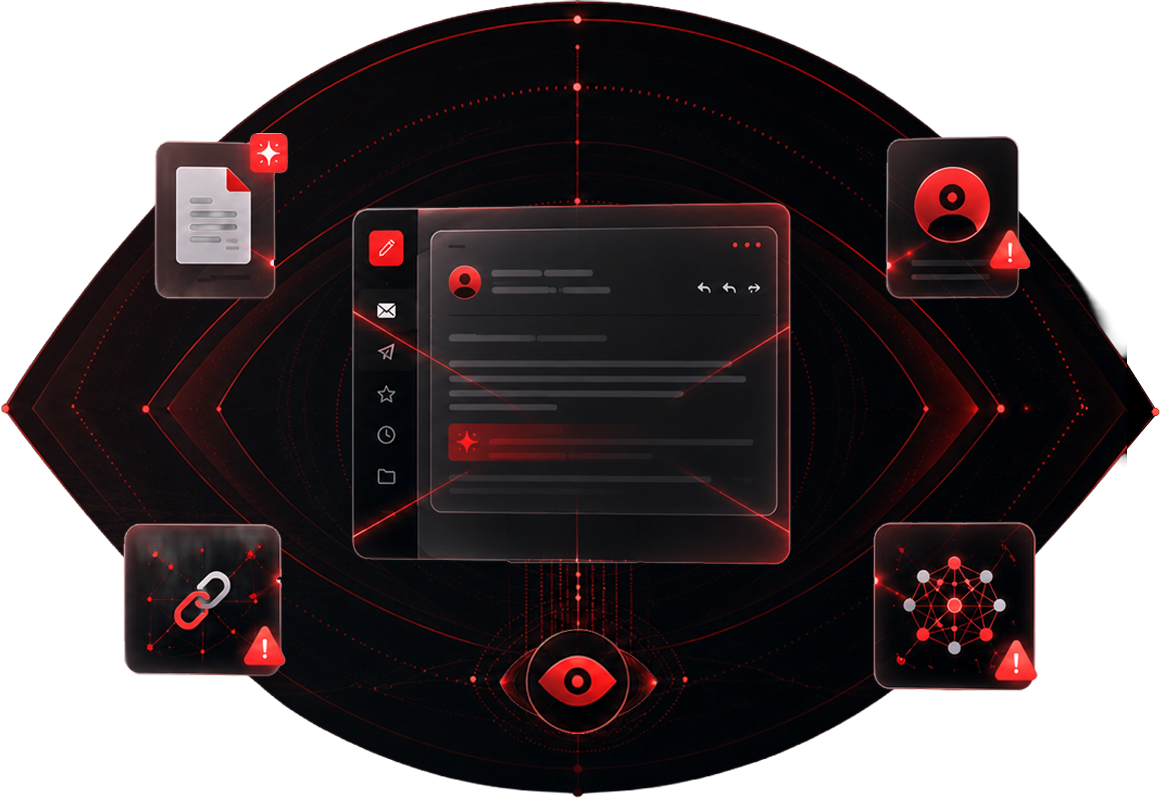
Review document metadata, filenames, creator fields, modified properties, and embedded indicators to identify AI-assisted contracts, reports, presentations, and summaries; attachments modified using AI applications; and sensitive documents redistributed after AI processing.
Identify subjects, message bodies, paragraphs, or sections that appear to have been generated or significantly assisted by AI.
Detect AI assistants, note-taking services, transcription platforms, AI ingestion addresses, and automated AI workflows included in To, CC, or BCC fields to identify when business communications are routed into an AI system.
Find references suggesting that email content or attachments were pasted into, rewritten by, summarized with, or analyzed using an AI tool. Detection includes references found in email content, attachments, URLs, and message text.
Kill AI leak viability of your docs even at third parties. Control your documents and spreadsheet content from ingestion into AI even when third parties try to summarize your strategic content in their AI tools.
Identify links to AI platforms, AI document-analysis tools, AI portals, AI-powered services, and AI workflow destinations.
Detect prompts concealed in email bodies, HTML attachments, document metadata, images and message content that may be processed by AI, but easily missed by the human eye.
Identify instructions intended to alter AI behavior, bypass established controls, suppress warnings, produce misleading summaries, trigger unauthorized actions, or extract confidential information.