


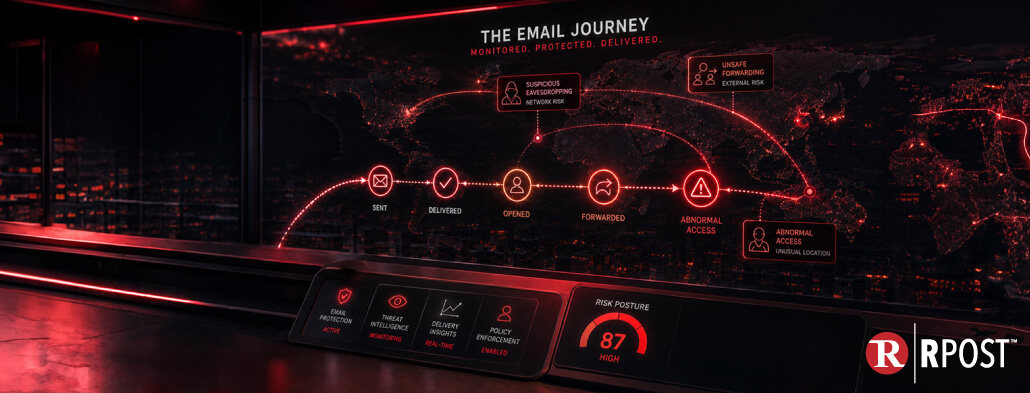
Some of the most important email exchanges within organizations happen with people outside their perimeter - customers, suppliers, brokers, financial institutions, and other third parties, creating a practical security problem.
Your controls may be strong within your own environment, but the message and its content often continue to move through systems you do not manage.
A legitimate third-party mailbox can be compromised and quietly monitored while an attacker gathers context from real conversations. A sensitive attachment can be sent to the wrong recipient, an impersonation or reply-hijack attempt can surface inside an existing email thread, or an employee can send (accidentally or with ill intent) regulated or confidential information somewhere policy says it should not go. These are all different problems, and they occur at different points in the communication process.
For organizations handling financial information, health data, legal documents, customer records, intellectual property, or other sensitive content, that distinction matters. Security teams need controls before a message is sent, protection while employees are working in their inboxes, and ways to respond when risk appears after delivery.
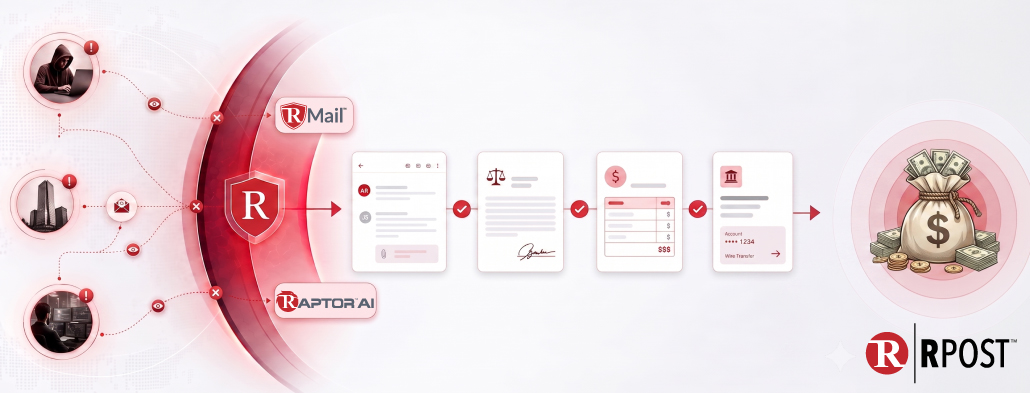
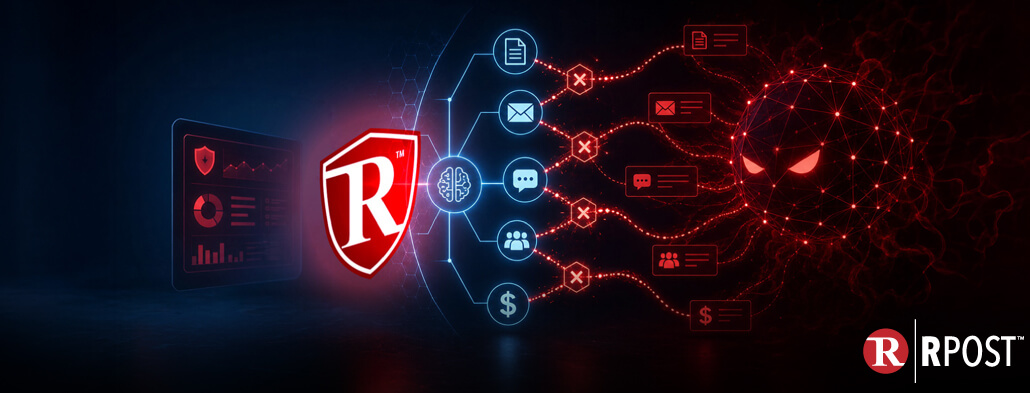
RMail® addresses these areas through eight complementary security layers covering inbound gateway security, in-the-inbox protection, outbound DLP, post-send Double DLP™, PRE-Crime™ cyber counterintelligence, AI-era threat and observability controls, content security, and secure workflows. The platform can also operate alongside existing Microsoft and other email gateway environments, allowing organizations to add protection around specific gaps without requiring a full replacement of their current infrastructure.
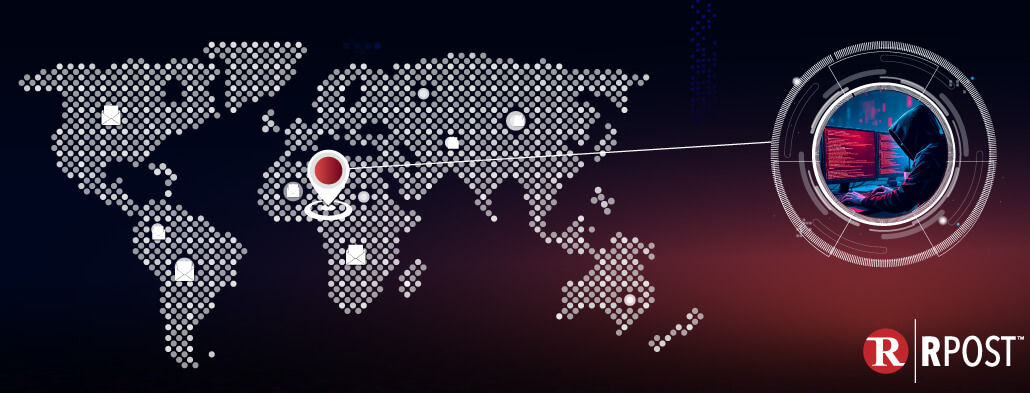
At the same time, another RPost tech - RAPTOR™ AI adds another layer of intelligence around legitimate outbound communications. It is designed to identify suspicious reconnaissance, third-party risk, and related threat signals that may indicate someone outside your secure environment is using your trusted communications to prepare for impersonation, payment diversion, data theft, or another attack on you.
For security and compliance teams, the question then becomes: what visibility and control do they still have after sensitive information crosses the boundary of their organization? Let’s talk if you’re curious about extending protection across the complete email security lifecycle.
October 29, 2026
October 13, 2026
August 20, 2026
August 13, 2026
.jpg)
August 06, 2026


 Industry Insights
