




Email attacks are no longer arriving as obvious spam or malware. Some attacks contain no malicious attachment; rather, they rely on trust, urgency, payment context, and normal business behavior. For instance, a convincing message may imitate an executive, use a supplier’s compromised account, continue an existing conversation, or persuade an employee to send sensitive information to the wrong person.
Email attacks are now built around timing. A phishing email does not need to sit in an inbox for days to create damage. A user can click in minutes, a finance team can act on a fake vendor request before anyone checks the sender, a malicious link can look harmless at delivery and turn dangerous later, or a reply can come from a compromised account inside a trusted thread and bypass the usual suspicion that comes with a new sender.

Most cyberattacks don’t look malicious anymore; rather, they’re as normal as they can be. An email arrives from a known vendor, the tone matches past conversations, the timing aligns with an active transaction... Nothing triggers suspicion until money moves or data leaks.
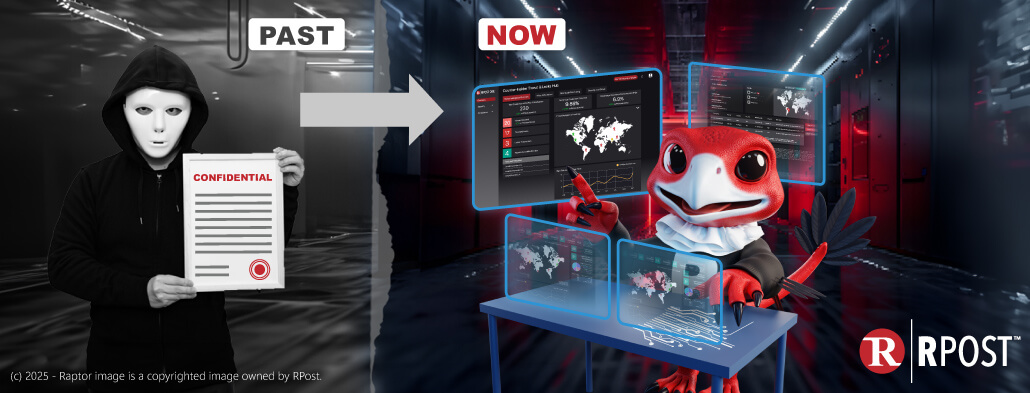
Hey there, Rocky the Raptor here, swooping in to chat about a big shift in the world of cyber threats. Back in the day, companies (especially law firms) worried a lot about what we used to call a “Man-in-the-Middle” attack.

Armand here, RPost’s product evangelist armadillo. With the stock market frenzy, tariff talks and AI stock-hype-cycle, I’ve been wearing my macroeconomic hat lately.
September 25, 2026
August 21, 2026
July 31, 2026

July 06, 2026
June 19, 2026