




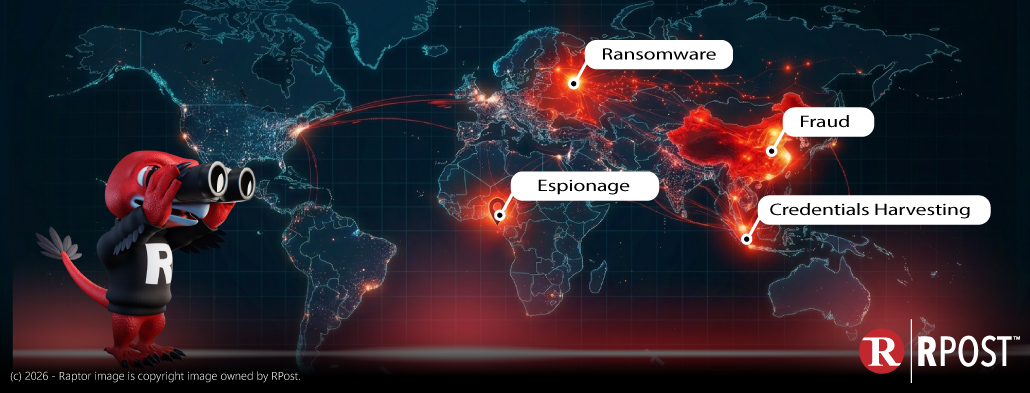
Rocky the Raptor here, RPost’s cybersecurity product evangelist. If you’ve ever listened to cybersecurity threat hunters talk shop, you’ll hear a phrase that pops up again and again: “We’re trying to attribute the attack.”
That means identifying which threat actor group is behind the activity or at least forming the best possible hypothesis. Now, some people outside the security world ask: Why does that matter? Isn’t an attack just an attack?
It doesn’t work like that in cybersecurity, where who is attacking often tells you how they attack and what they want at the end of the day. And that can make all the difference in how you respond.
The easiest way to understand attribution is to think about organized crime. If a detective knows the crime came from a specific gang, they immediately gain clues about motivation, methods, target selection, and what happens next.
Cybercrime works the same way. Groups like Black Axe, Zoe Mafia, and Fluffy Spider represent very different models of cybercrime. And understanding those models helps defenders anticipate the next move.
Let’s start with the mafia-style operations. Groups like Black Axe and Zoe Mafia emerged from traditional organized crime structures. These are groups that have historically been involved in financial fraud, human trafficking, drug networks, and physical intimidation. Cybercrime simply became another revenue stream for them.
Their cyber tactics often focus on BEC, social engineering, payment diversion, romance scams, and financial extortion. The goal is straightforward - get money, quickly and repeatedly. And because they often mix cybercrime with traditional criminal operations, they’re comfortable targeting individuals, businesses, and institutions alike.
Now compare that with groups like Fluffy Spider. These actors are less like mafia bosses and more like illegal software startups. Instead of directly running scams, they develop phishing kits, build ransomware frameworks, maintain malware infrastructure, and provide customer support for criminals
Yes… customer support! Welcome to Cybercrime-as-a-Service (CaaS). These groups operate marketplaces where criminals can rent phishing tools, launch ransomware campaigns, purchase stolen credentials, and automate attacks. Their business model is simple - build the tools, let others run the scams, and collect a cut.
It’s a pure SaaS model, just flipped to the dark side.
Once threat hunters identify which group is likely behind an attack, they can predict the likely outcomes.
Different actors with different endgames. That’s what attribution does; it turns random incidents into recognizable patterns.
Here’s something most people miss. Threat hunters often identify actors during the reconnaissance phase, long before the actual attack.
That’s when cybercriminals are quietly reading compromised email threads, studying document exchanges, mapping business relationships, and harvesting context. That context fuels the lures used in BEC, ransomware, and phishing campaigns, and those reconnaissance patterns can often reveal which threat actor group is operating.
In many attacks today, the criminals aren’t initially stealing money or deploying malware. They’re stealing context:
Once they have that intelligence, they can create hyper-believable lures that even well-trained employees struggle to detect. That is why modern security strategies focus on preempting reconnaissance, not just blocking payloads.
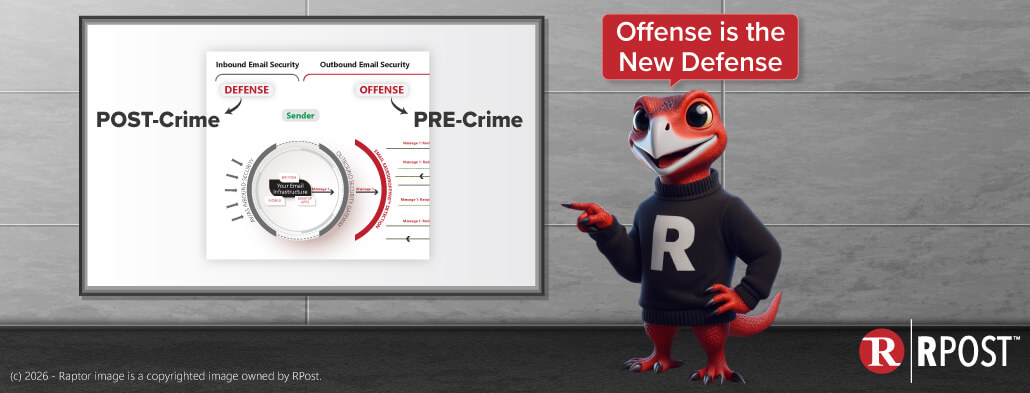
If you want attribution to be faster and less guesswork, RPost’s PRE-Crime™ Preemptive Cybersecurity, powered by RAPTOR™ AI, can help. Using LLM semantic analysis of thread content elements, metadata, and known patterns, the tech maps threat actors (insiders and externals) and the reconnaissance patterns that usually show up BEFORE the attack lands.
Cybercrime isn’t a random collection of lone hackers anymore. It’s an ecosystem of organized criminal gangs, cybercrime software builders, infrastructure providers, and laundering networks. And like any ecosystem, it has structure.
When threat hunters attribute an attack to a group, they’re not just naming the enemy - they’re predicting the playbook.

May 05, 2026

April 22, 2026

April 17, 2026

April 03, 2026
March 27, 2026



 Blog
Blog